

Pilgrimage of Valme
What is the Pilgrimage of Valme?
Festival of tourist interest.
The Pilgrimage of the Virgen de Valme is one of the main festivals in the province of Seville. It takes place every third Sunday in October between the cities of Dos Hermanas and Seville, more specifically, between the municipality of Nazareth (gentilicio de Dos Hermanas, taken from the surname of Elvira and Estefanía Nazareno, its first settlers and relatives of Gonzalo Nazareno, champion of King Ferdinand III ‘The Saint’, who granted him the land on which the present city is built) and the Seville neighbourhood of Bellavista, near which is the chapel that Saint Ferdinand ordered to be erected in gratitude for the valour (or help) given to the monarch during the Reconquest of the capital of Seville.
In terms of the number of participants, the Romería de Valme is considered the third in Andalusia after that of the Virgen del Rocío in Almonte (Huelva) and that of the Virgen de la Rocío in Almonte (Huelva).
Cabeza in Andújar (Jaén), bringing together more than 200.000 pilgrims. This figure shows that the main festival of the city of Dos Hermanas can also be considered one of the most important pilgrimages in Spain.
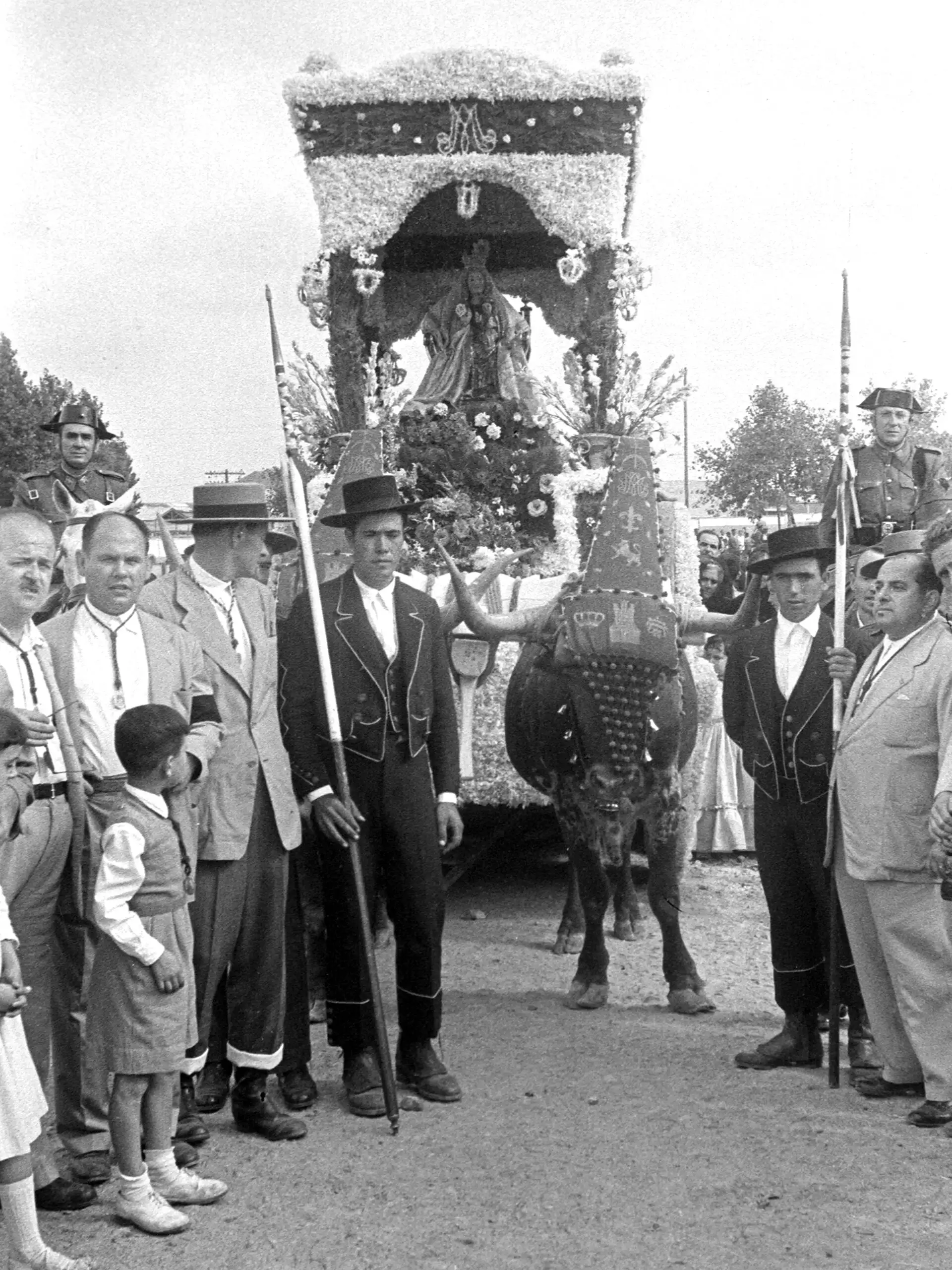
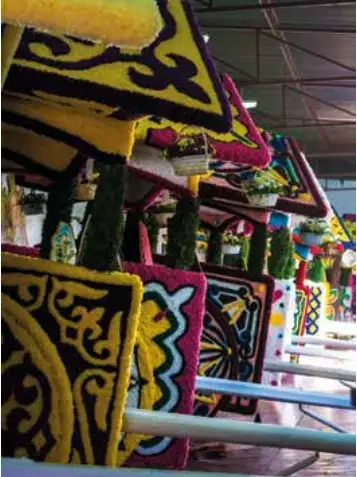
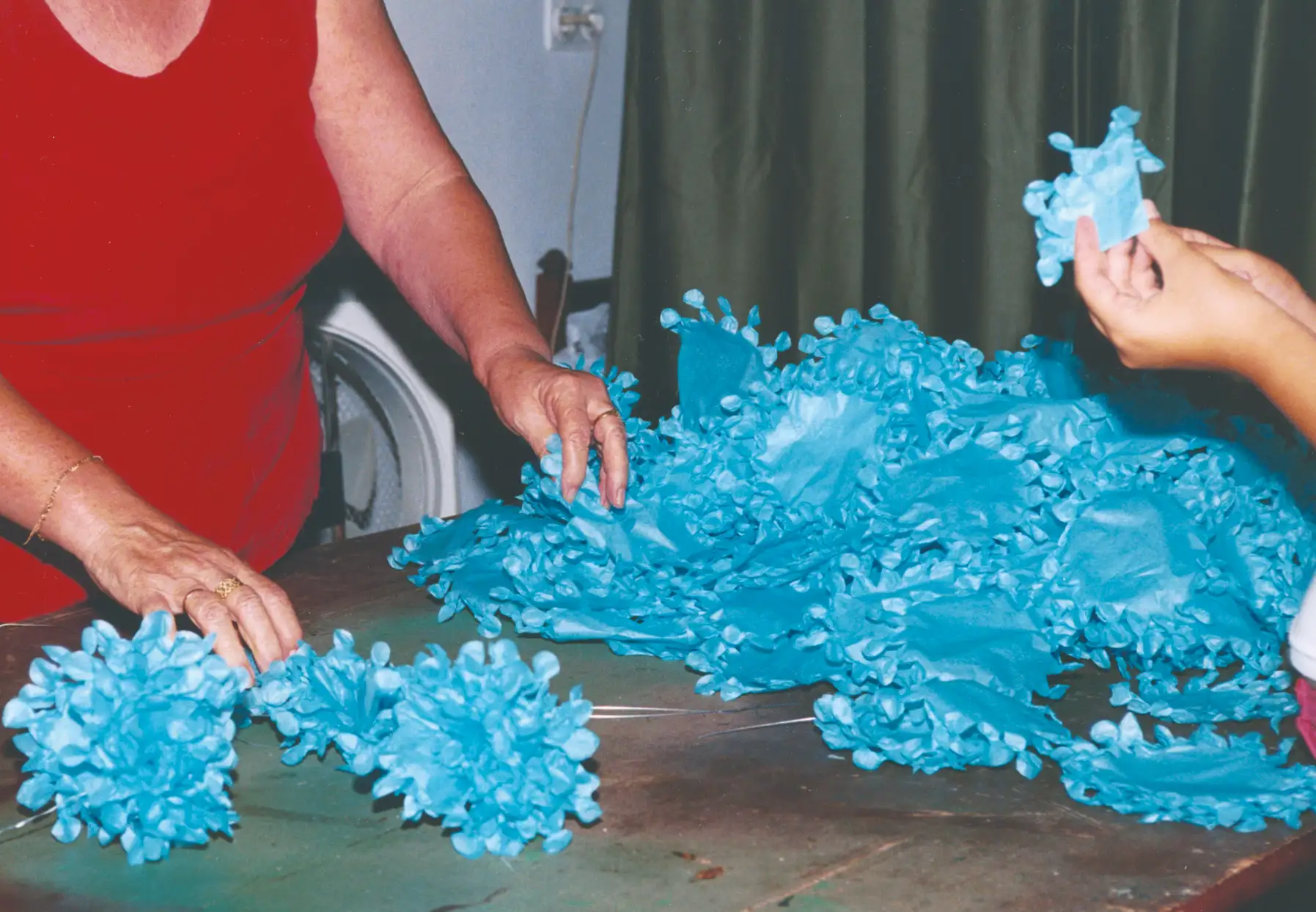
Held for the first time in 1894, Today, this multitudinous religious and festive celebration stands out especially for the uniqueness of the wagons - including that of the Virgin herself - which make up the procession and which are decorated with hand-curled silk paper flowers. These are authentic ephemeral works of art in which art and craftsmanship are combined and which are particularly striking for their colour, beauty and the perfection of their finish.
Declared of Tourist Interest in 1976.
San Fernando, Fernán Caballero and the Dukes of Montpensier
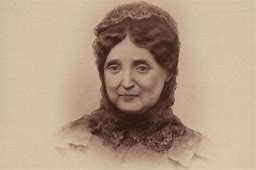
Along with Ferdinand III, other prominent figures in the history of the Virgen de Valme have been the writer Cecilia Böhl de Faber -better known by the pseudonym Fernán Caballero- and Antonio de Orleans and Luisa Fernanda de Borbón, Dukes of Montpensier, who promoted devotion to the image as well as the recovery of some of the unique elements donated by Ferdinand III himself to the image after the conquest of Seville.
In the specific case of the novelist, she recorded the history of the image and its link with San Fernando and the Reconquest of Seville in her work ‘The Alvareda family’(1856), set in the then town of Dos Hermanas. The Dukes of Montpensier, who were then living in Seville, read the work and learned of the state of abandonment of both the chapel and the banner offered to the Virgin and taken from King Axataf of the then Isbilya (the name of Seville during its Muslim period).
For this reason, the dukes decided to restore the banner (which from 1 May 1857 was placed in the Parish Church of Santa María Magdalena of Dos Hermanas) and, two years later, to rebuild the sanctuary of Cuarto, inaugurated on 9 October 1859. From this date, the Virgin of Valme remained again in her old hermitage, now restored (since the beginning of the 19th century she had been worshipped in the aforementioned Nazarene temple), but such was the devotion to her in the town that, in 1869, it was agreed that the image should remain definitively in the Sacramental Chapel of the Parish Church of Nazareth.
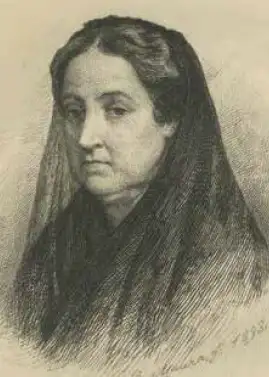
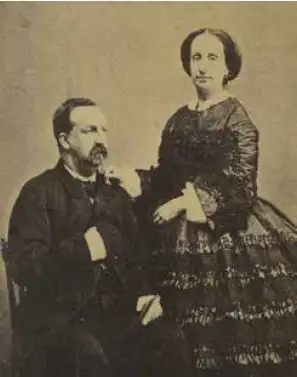
José Lamarque de Novoa,
the great promoter of the Romería
Born in Seville in 1828, he was the great promoter of the celebration of the Romería de Valme. A military man, businessman, poet and diplomat, he was a particularly influential person in the development of Dos Hermanas in the second half of the 19th century and, more specifically, in the reorganisation of the Brotherhood of Valme.
Consul of the Kingdom of Naples, of El Salvador and of the Austro-Hungarian Empire, he was decorated with the Grand Cross of Isabella the Catholic. Also, on a more local level, he was twice the elder brother of the Soledad de San Lorenzo de Sevilla.
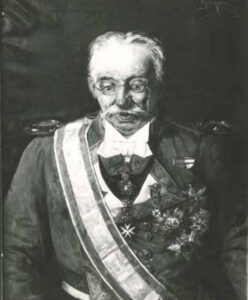
As for his literary facet, his style was markedly influenced by authors such as Zorrilla, Núñez de Arce and the great classics. A lover of everything related to the Middle Ages - hence his special interest in recovering the devotion to the Virgin of Valme and his links with San Fernando - he was a patron and protector of artists from different disciplines, such as the painter Virgilio Mattoni, the Bécquer brothers or of a young and as yet unknown Juan Ramón Jiménez.
In 1872 he moved in with his wife, the poet Antonia Díaz, He was born in the town, where he was to live, La Alqueria del Pilar (now the municipal park). In this beautiful Nazarene retreat, which, due to its halo of intellectuality, earned it the nickname of «Versailles de Sevilla», spent her last days. Lamarque de Novoa died in September 1904, twelve years after her.
Vespers
The celebration of the Romería de Valme is not limited to the third Sunday in October. From nine days before The city of Dos Hermanas is already living intensely the main festivity of the municipality around the image of its Heavenly Protector.
The transfer, the main function and the opening speech
Vespers begin two Fridays before the pilgrimage. On that day the Virgin is transferred from the Chapel
Sacramental of the Parish Church of Santa María Magdalena to its altar of worship, located in front of the main altarpiece of the church. Two days later, on the second Sunday of October, the main service is held - traditionally officiated by a bishop, in most cases the titular bishop of the Archdiocese of Seville - as well as the proclamation in his honour.
The offerings of school children and the quinary
Between Monday and Friday before the big pilgrimage day, the parish becomes a hive of activity both in the mornings and afternoons. In the mornings, hundreds of the city's schoolchildren come to Santa María Magdalena to make their floral, poetic and food offerings to the Virgin. On the last day of the school week, an event takes place that generates greater expectation with each passing year. It is the dance of the ‘nazarins’. They are a recreation of the sixes of the Cathedral of Seville, sharing with them the same costume design - a hat with a large feather on the front, doublet (a tight-fitting sleeveless jacket), short trousers, a band across the chest, stockings and white slippers - except that in the case of the Nazarene dancers the predominant colours are red and blue, identifying the Hermandad de Valme. The boys and girls in charge of dancing every year in front of the Protector of Dos Hermanas are chosen each year by the Brotherhood from among its members aged between 7 and 8 years old. Previously, for 20 years, the selection was made from the pupils of the local CEIP Carlos I, the school from which this initiative began.
Afternoons are reserved for the quinary, The priest who officiates is usually a priest with recognised oratorial skills and the choir of the Hermandad de Valme sings a carefully chosen repertoire of sevillanas and rumbas adapted to the liturgical celebration.
The Saturday before the pilgrimage
If along with the Sunday of the Pilgrimage there is another day when Dos Hermanas takes to the streets en masse to experience the big fiesta atmosphere around Valme, it is the Saturday before the pilgrimage. From very early in the morning, the doors of the parish church are open for anyone who wishes to go through the streets. veneration of the Virgin, The event, which will continue uninterrupted until almost midnight. The queues for access to the church constantly surround the block where it is located. Meanwhile, not far from this church, in what used to be the former Ave Maria Schools -Today, the headquarters of the Hermandad de Valme, there is no end to the visits throughout the day to see first hand how the the carts who will accompany the Virgin, authentic prodigies of curled tissue paper, handmade by hand every year following the tradition. For their part, the galleys that will follow the wagons on pilgrimage are on display during the day in the Caseta Municipal, in the Dos Hermanas fairgrounds.
Service information
What is the see, when and where?
The Pilgrimage
It is held every third Sunday in October and annually follows the same schedule:
06:00 hours: Romeros Mass in the parish church of Santa María Magdalena.
08:00 hours: Departure of the image of the Virgin and enthronement in her cart. The procession begins its journey to the chapel of Cortijo de Cuarto, in Bellavista (Seville).
13:00-14:00: The arrival of the Virgin's cart to her historic shrine takes place at this time of day. Holy Mass is then celebrated in the sanctuary.
14:00-17:30: During this time, the groups of pilgrims who have accompanied the Virgin experience the most festive hours of celebration, sharing their food with friends and family, while singing and dancing sevillanas and rumbas.
17:30: The prayer of the holy rosary begins and the whole procession prepares to set off on its return journey to Dos Hermanas.
18:00: The wagon of the Virgin begins its return journey to the town of Nazareth, taking the same route by which it arrived at her hermitage.
21:30: The Virgin arrives in Dos Hermanas, beginning a brief tour of the most central streets.
23:00: The wagon of the Virgin arrives at the Parish Church of Santa María Magdalena and the parade takes place for the awarding of prizes to the wagons and galleys that have accompanied her throughout the day.
Related places of interest
Parish Church of Santa María Magdalena.
Epicentre of the eve of the pilgrimage. In this temple - the largest and oldest in Dos Hermanas, in neoclassical style, built at the end of the 18th century on top of an earlier one and located in the centrally located Plaza de la Constitución (or ‘Los Jardines’) - the main function, the proclamation, the quinario and the veneration of the Virgen de Valme take place.
Road A-8032, ‘La Carretera Vieja’.’
It joins Dos Hermanas with the Sevillian neighbourhood of Bellavista, and is the route along which the pilgrimage procession travels on the third Sunday in October to reach the Cortijo de Cuarto chapel and return to the town of Nazareth. On both sides
Along this road many families and groups of friends spend a day in the countryside waiting for the passing of the Virgen de Valme. Of this narrow, winding, country road, places such as the well-known ‘Barranco’ (ravine), when passing the arch of the former Torre de Doña María farm, or the popular ‘Cuesta del Inglés’, when the slope of the road shows the city of Seville on the horizon, stand out.
Chapel of the Virgen de Valme.
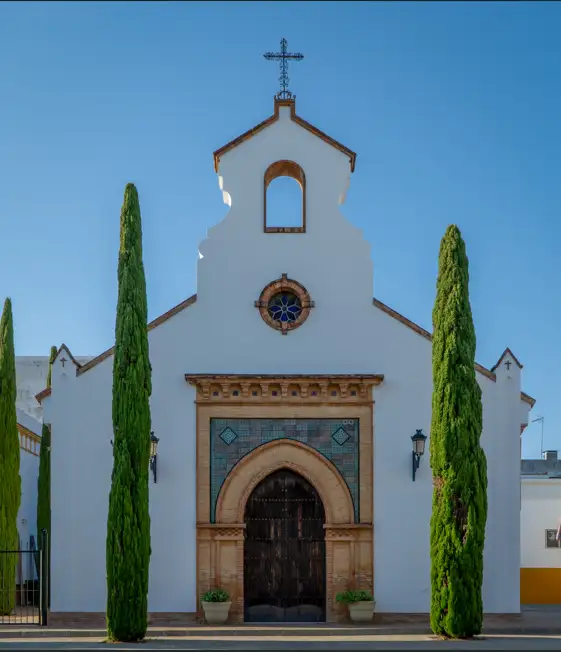
Located in the current grounds of the land known as Cortijo de Cuarto, in the Sevillian district of Bellavista, this sanctuary of medieval origin, rebuilt in 1859, was where the Virgin of Valme was continuously worshipped until 1869, the year in which the image was definitively taken to the parish church of Santa Magdalena in Dos Hermanas. Nowadays, this hermitage is the high point of the pilgrimage, where the image is enthroned on its arrival in Cuarto, and from where it leaves to return to its Nazarene temple.
Former Ave Maria Schools.
Located on Avenida de Andalucía in Dos Hermanas, next to the parish church of Ave María and San Luis, this former educational building (built in 1917) houses the premises of the Hermandad de Valme, including the halls where the colourful wagons decorated with curly silk paper that form the Virgin's retinue on the day of her pilgrimage are prepared and displayed, as well as the corresponding one in which the image itself will be carried.
Municipal stand.
Located in the fairgrounds of Dos Hermanas, in the Vistazul neighbourhood, it houses the galleys which, after the carts, form part of the procession of the Romería de Valme.
Other proposals for visits
Chapel of Santa Ana.
Attached to the back of the Parish Church of Santa María Magdalena is this small chapel, one of the oldest buildings in the town, where the Gothic image (13th century) of Santa Ana, patron saint of Dos Hermanas, is worshipped. The cave in which, according to tradition, she was found by Elvira and Estefanía Nazareno, the first settlers of the town, is located in the basement of this temple and can be visited.
More information:
*Tourist Guide to the Pilgrimage of Valme
*Hermandad de Valme | Dos Hermanas
Gallery
What mobility considerations should I take into account for the Romería de Valme?
Dos Hermanas in the Romería de Valme, undertakes special services to improve traffic in the city during the festival. Such as: Traffic and city buses affected
What places of interest related to the Romería de Valme stand out?
There are many emblematic sites linked to the Romería de Valme, some of which include: the Valme Chapelthe Parish Church of Santa María Magdalena, known as «Carretera Vieja» (A-8032), the Former Ave Maria Schools (Casa Hermandad).
Find out more: Tourist attractions - Turismo Dos Hermanas
When does Santa Ana come out in Dos Hermanas?
The festival in honour of St. Anne'sthe patron saint of Dos Hermanas, is celebrated every year. 26 July. The procession of the image, which takes place on the same afternoon, is one of the most important and emotional events for the Nazarenes (the local people).
What are the inhabitants of Dos Hermanas called?
The inhabitants of Dos Hermanas are called Nazarenes o nazarenas.
Why is it called Dos Hermanas?
Elvira and Estefanía, two sisters whose family relationship with the Leonese nobleman D. Gonzalo Nazareno, who, after the reconquest of Seville, obtained as a prize the lands where the two sisters settled, is unknown.
What other places or monuments stand out in Dos Hermanas?
Among the most emblematic areas are also the St. Anne's Chapelthe Chapel of San Sebastiánand the Palace of Alpériz, the Casa de Poetas del Parque de La Alquería del Pilar, on La Almona Cultural Centre, the Casa del Arte. These places reflect the historical and artistic richness of the locality.
How to get to Dos Hermanas from Seville?
It is very easy to get to Dos Hermanas from Seville. You can opt for:
- Suburban train (lines C1 and C2)which connects Seville and Dos Hermanas in approximately 15 minutes.
- Intercity buses with direct routes.
- Carthrough the road A-376in less than 20 minutes.
What fairs and festivals are typical in Dos Hermanas?
Dos Hermanas has very important traditional celebrations:
- The Dos Hermanas Fairone of the most outstanding in the province, which is held in May.
- The Pilgrimage of Valmein honour of the Virgen de Valme, takes place on third Sunday in October and attracts thousands of visitors every year.
- The patron saint festivities of St. Anne's (July) and San Sebastian (January).
Where to eat in Dos Hermanas?
The gastronomy in Dos Hermanas is rich and traditional. You can enjoy tapas, Andalusian dishes and local produce in bars and restaurants in the centre, as well as at the Arenal Square. Don't miss the fried fishthe salmorejo or the classic spinach with chickpeas.
If you are a lover of good food, don't miss our gastronomy section, where you will discover the most authentic flavours and the most delicious corners of Dos Hermanas. Let yourself be carried away by the aroma and flavour of Andalusia! Explore the gastronomy of Dos Hermanas here
Which parks and natural spaces to visit in Dos Hermanas?
Dos Hermanas has several green spaces ideal for families and nature lovers:
- The La Alquería del Pilar Municipal ParkThe park has walking areas, gardens and a small lake.
- The Dehesa de Doña María Forest Parkperfect for walking routes and outdoor activities.
- The surroundings of the Guadaíra river and its natural environment.